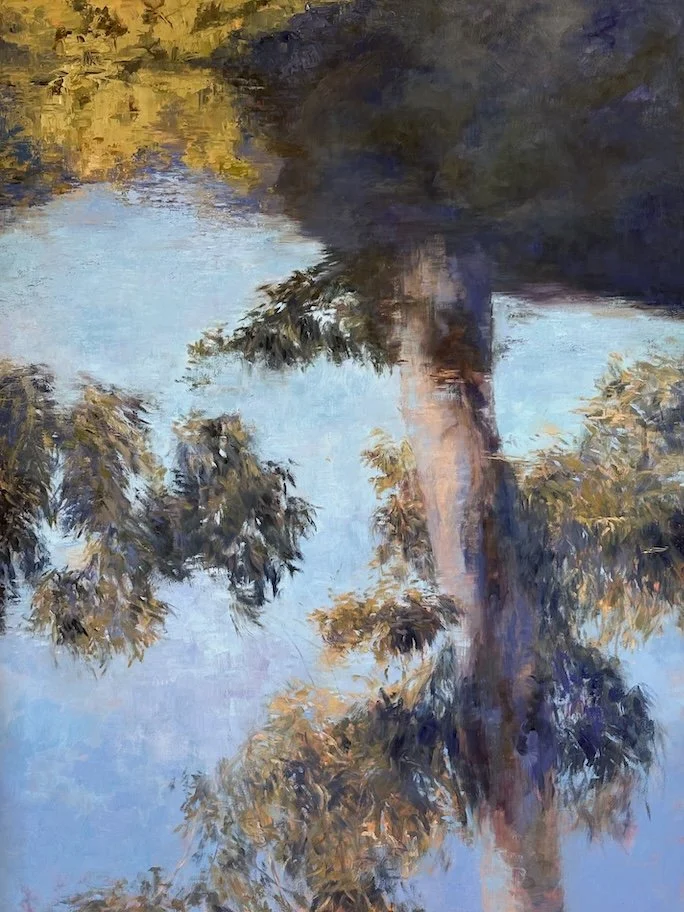
Falling Upwards VI, 2026, oil on board, 102 × 76 cm
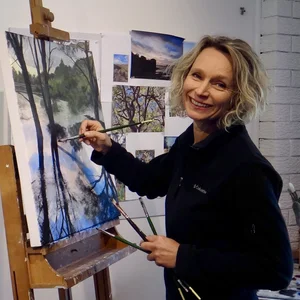
In the sharp winter light, beneath arcing scribbly gum branches, I leant over my nearly finished painting with a whining electric sander in my hand. The shrill sound reverberated off the paving and nearby studio walls. Fine clouds of indigo and ochre dust floated up into the air, and I felt a sense of relief and rising possibility.
Over the preceding weeks, this painting had been resting on an easel in my studio. Although nearly complete, a small part of the composition felt ‘off’. I had felt a subtle yet nagging unease about it and after some time, I resigned myself to acting.
It wasn’t an easy decision. The section of the painting in question was not poorly painted. On the contrary, I felt pleased with the marks and colours. Yet I also knew that I needed to follow my gut to sacrifice this part of the picture, no matter how well executed or evocative, for the success of the whole.
This story is not unique or unusual, though it sounds somewhat drastic. The act of stripping away the layers of paint to regain the smooth texture of the wood panel freed me to find the visual solution the work needed.
Often when paintings are close to being finished, I choose to slow down. The process of resolution requires curiosity, courage and trust.
Curiosity to notice where one’s eyes travel, linger or leave the picture. Curiosity to notice what thoughts, emotions and sensations the picture evokes. Curiosity to see the painting as though for the first time.
Courage to attend to one’s ‘hunches’, to listen to curiosity’s responses and to take risks.
And trust to take action.
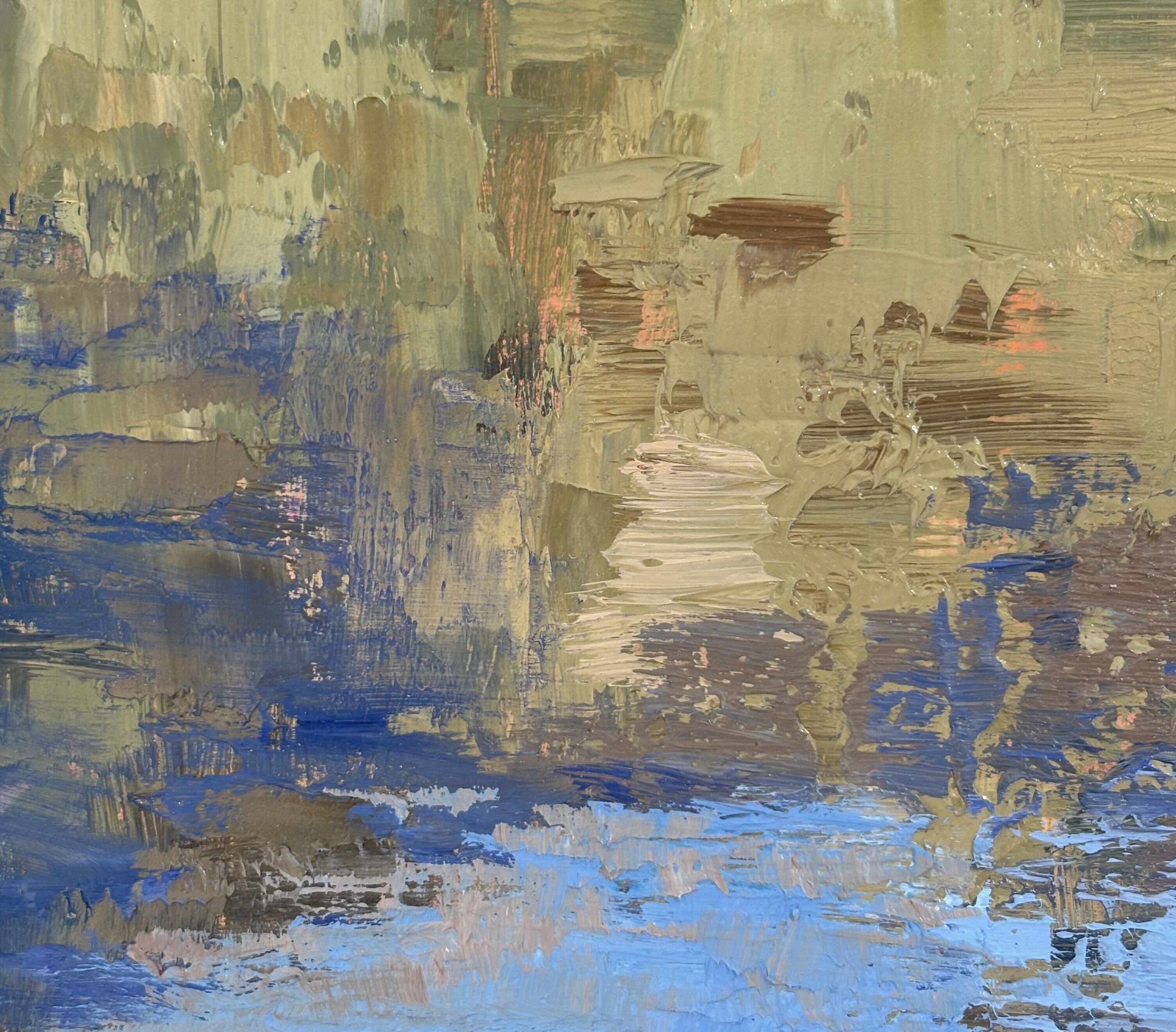
Falling Upwards VI, 2026, oil on board, 102 × 76 cm (detail)
None of this comes easily, despite years of experience. I can easily focus on the merits of the ‘troubling’ part of a painting and get stuck in indecision. Setting caution aside and trusting myself feels uncomfortable. It’s not dissimilar to going for a walk on a cold day. The action needs to come first; the empowerment and gratification follows.
And all this with steady, deep attention — thus the need to slow down.
In the final stages of a painting, each mark made carries great potential to affect the sensibility of the whole. Each mark needs to be considered and attuned to the authenticity already inherent in, yet still emerging within the painting.
This story began with sanding in my backyard. That painting, Falling Upwards VI, now hangs quietly on my studio wall. The repainted passage feels expansive and light — just right. Now it feels ready to go out into the world.
Together with others from the series, it will be part of my new exhibition, Near and Far in Leura next month. If you're in the Blue Mountains or able to visit, I'd love to share them with you.
Near and Far opens at Everglades Gallery, Leura on 29 August.